You already solved Sweden. Europe is a config change, not a rebuild
If your POS is live with fiskaly SIGN SE, you've done the hard part: certified integration, real transaction volume, a working relationship with a compliance partner. Selling into another European country shouldn't mean doing all of that again from scratch.

Not a typical multi-country rollout
Every European country writes its own fiscalization rules — Germany's KassenSichV looks nothing like Spain's Verifactu on paper. Historically, that's meant POS vendors either avoided certain markets or maintained separate integrations, separate vendors, and separate support relationships for each one.
Our Unified API (UAPI) is built to remove that problem. It's one SDK that routes each transaction to the right national system behind the scenes — you write to one interface, and the regulatory complexity for KassenSichV, RKSV, NF525, and the rest lives on our side, not yours.

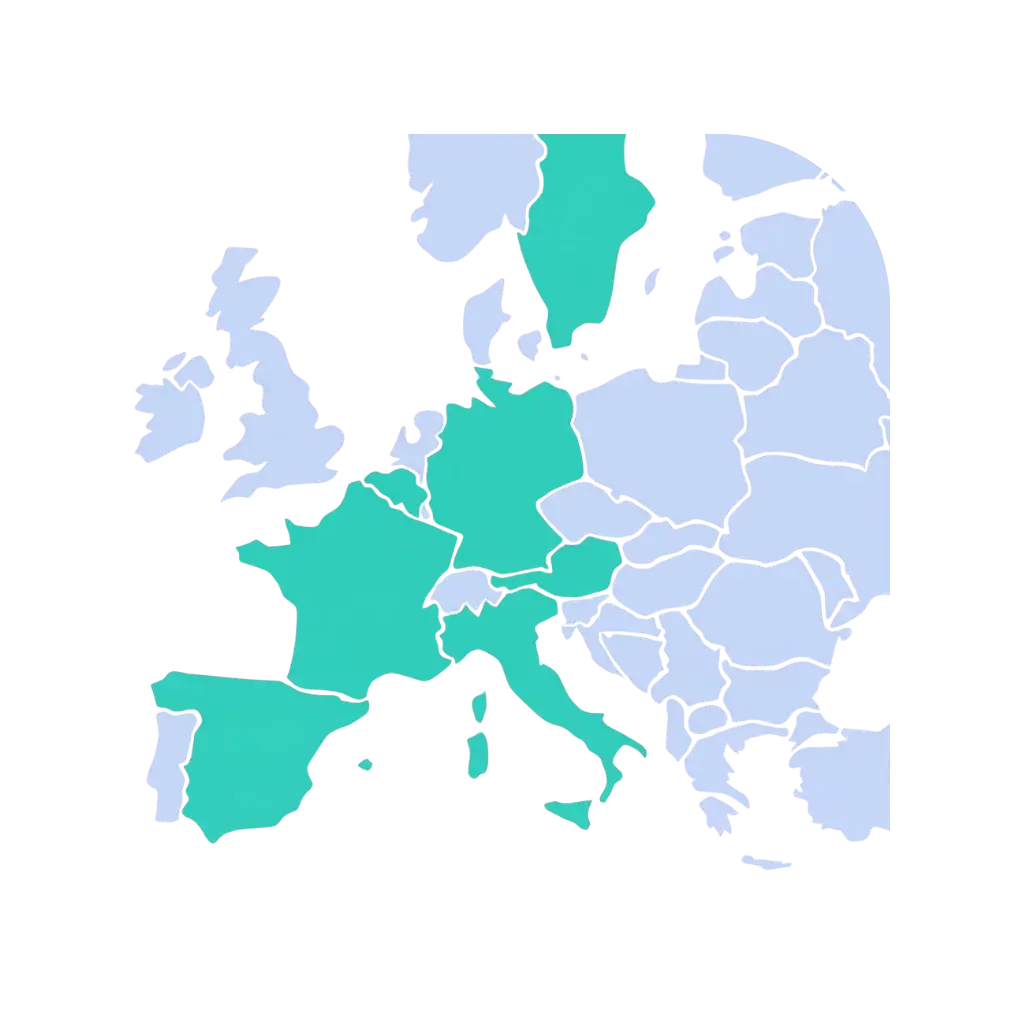
Available with our Unified API today
- Austria — SIGN AT
Coming soon.
- France — SIGN FR
- Italy — SIGN IT
- Portugal — SIGN PT
- Sweden — SIGN SE
- Belgium — E-INVOICE BE
- Germany — E-INVOICE DE
- Italy — E-INVOICE IT
What changes when you expand
- Your contract doesn't reset
Your existing fiskaly agreement covers Sweden today; adding a market extends it rather than replacing it with a new procurement cycle.
- You pay for what you use
Pricing scales by active market — you're not paying a Europe-wide fee to support a single country's transaction volume.
- You keep one support relationship
Same team, same escalation path, whether the question is about Skatteverket or the German BSI.
- You learn one API, not five
New market, new configuration — not new documentation to read from zero.
Why this matters even if you're not expanding yet
Even if Europe isn't on your roadmap this year, it's worth knowing the door is open without a re-architecture later. Plenty of POS vendors who started with us in a single country ended up expanding because a customer asked for it — and being able to say yes quickly, rather than starting a multi-month integration project, is the actual advantage.
Frequently asked questions
No — that's the point of the Unified API. The core integration pattern (authentication, transaction submission, response handling) stays consistent; what changes is the market parameter and any country-specific fields.
Per-market. You only pay for the countries where you're actually processing transactions.
Yes — sandbox access works the same way it did for your original Swedish integration, so you can test a new market's requirements before it's live for real customers.
Tell us. Market prioritization is partly driven by demand from vendors already on the platform.