
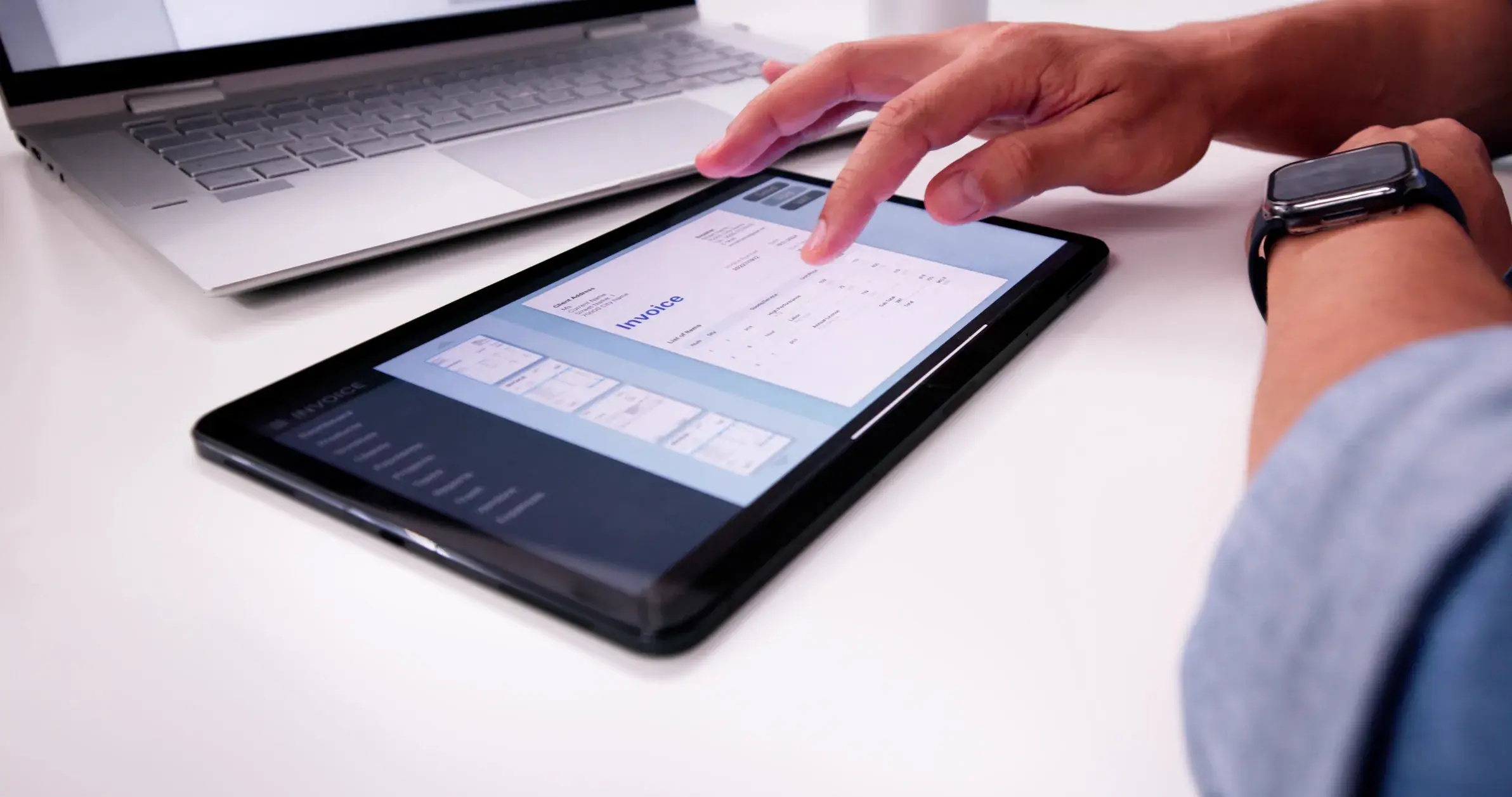
E-Invoicing Requirement: what businesses need to know
Background and Legal Framework
Since January 1, 2025, every business established in Germany must be able to receive electronic invoices (e-invoices) for domestic B2B transactions. Issuing them becomes mandatory in two steps, in 2027 and 2028. The goal is to prevent VAT fraud while promoting digital transformation in accounting.
The Growth Opportunities Act, adopted in March 2024, serves as the legal foundation. It aims to boost growth, investment, and innovation while simplifying tax processes.
An e-invoice, as defined by the E-Invoicing Regulation (§ 2 E-Rech-V), is valid only if it:
- is issued in a structured electronic format (e.g., XML), and
- allows for automatic electronic processing.
Unstructured formats such as PDFs or images are no longer considered e-invoices and can only be used during transitional periods.
Technical Requirements and Implementation Timeline
Approved Formats
Two formats are currently approved for e-invoicing:
- XRechnung: pure XML format, optimized for digital processing.
- ZUGFeRD: hybrid format combining a PDF and an embedded XML file – both human- and machine-readable.
Both comply with European Standard EN 16931 and are valid across the EU.
Mandatory Deadlines
To allow businesses to adapt, the following timeline applies:
- Until 31 December 2026: PDF or paper invoices still allowed (with recipient consent)
- From 1 January 2027: Mandatory e-invoicing for companies with annual revenue above €800,000
- From 1 January 2028: Mandatory for all companies
Mandatory Invoice Data
E-invoices must include the following details:
- Routing ID
- Payment terms and bank details
- Issuer’s email address
- Supplier or order number (if applicable)
Archiving
Electronic invoices must be stored for ten years in their original format (GoBD-compliant, immutable, and traceable).
To help businesses keep their fiscal data secure and compliant, fiskaly offers flexible archiving solutions: with SAFE and SAFE flex, all receipts and invoice data remain available long-term – regardless of data origin.
👉 Click here to read more.
Benefits and Recommendations
Advantages of E-Invoicing
- Automation – fewer manual processes
- Cost savings – no paper, printing, or postage
- Faster payments – invoices reach recipients instantly
- Error reduction – structured data minimizes mistakes
- Sustainability – lower paper use and CO₂ emissions
- Legal certainty – full regulatory compliance
Preparation Tips
Businesses should:
- Review IT systems and accounting software
- Implement suitable e-invoicing formats
- Adjust internal workflows and train employees
Conclusion
The e-invoicing obligation represents a major step toward digital, transparent, and efficient business processes. fiskaly supports companies in implementing compliant e-invoicing and automated receipt management.