
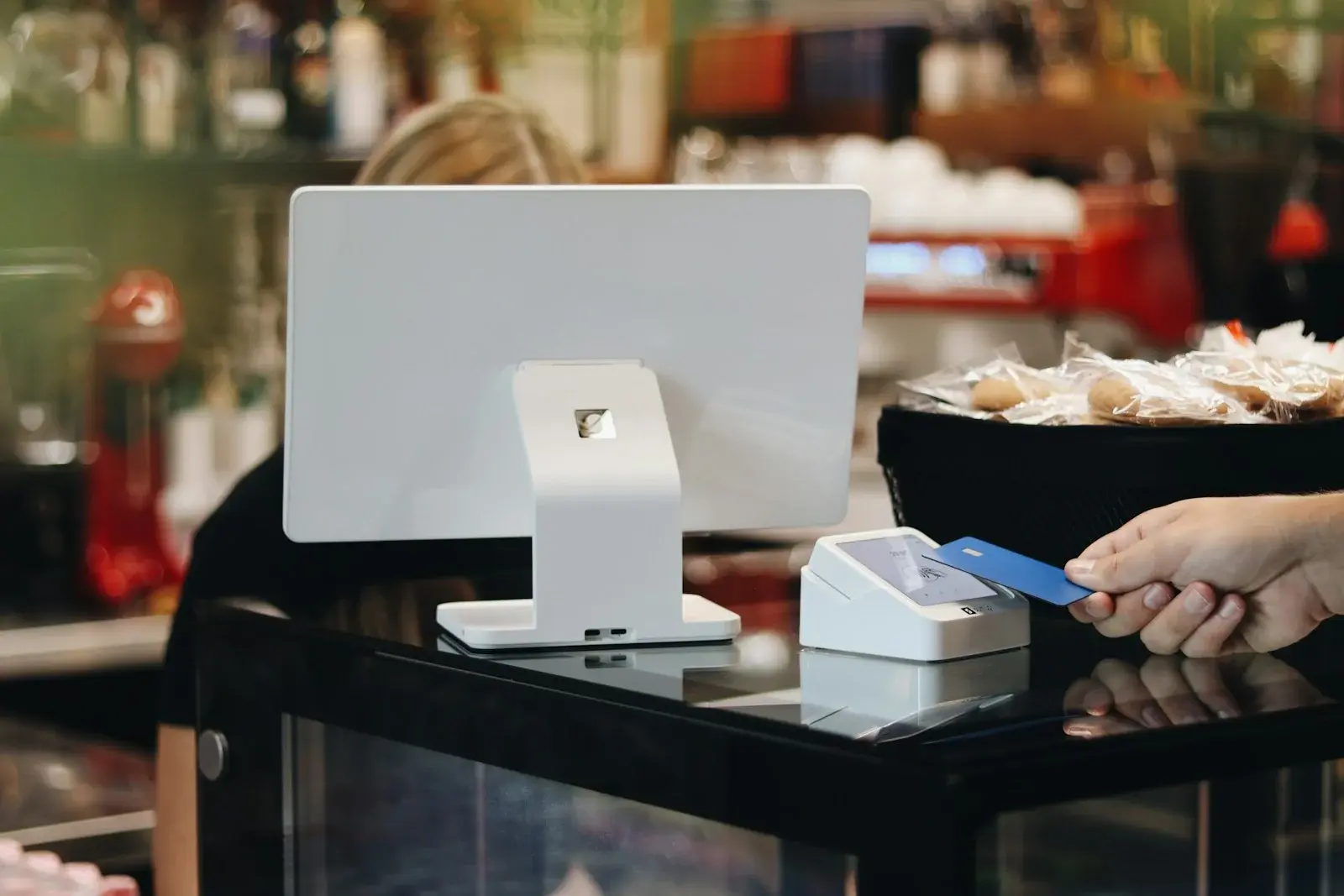
If you build point-of-sale software for the Swedish market, your product carries a legal obligation before it ever rings up a sale. That obligation sits in Chapter 39 of the Swedish Tax Procedure Act — Skatteförfarandelag, SFS 2011:1244 — which absorbed the rules of the original Cash Register Act (SFS 2007:592) when it was repealed at the end of 2011. The requirements apply to most businesses that accept payment in person, with a defined set of exemptions. This guide explains what the Act requires, who is in scope, the deadlines that matter, and what it means for POS vendors preparing to sell in Sweden.
What is the Swedish Cash Register Act?
The Cash Register Act (Lag om kassaregister, SFS 2007:592) introduced Sweden’s cash register requirements in 2007. The Act itself was repealed at the end of 2011, and its rules now live in Chapter 39 of the Swedish Tax Procedure Act (Skatteförfarandelag, SFS 2011:1244), together with Skatteverket’s implementing regulations. In everyday usage, kassaregisterlagen is still the term most people search for — but the active legal mandate is the Tax Procedure Act.
Under Chapter 39, businesses that sell goods or services against cash or card payment must record every sale using a certified cash register and issue the customer a compliant receipt. “Cash” is read broadly: the trigger is payment in person, and card payments count alongside notes and coins. The purpose is to give Skatteverket a reliable basis for checking that reported turnover matches the sales a business actually made.
Who must comply?
The Act applies to businesses selling goods or services against payment in Sweden. In practice that covers most physical retail and hospitality operations: shops, restaurants, cafés, hotels, salons, and repair businesses.
Several categories sit outside the requirement or fall under separate rules, exemptions examples include:
- Businesses operating purely online, with no in-person transactions
- Mail-order and telephone-order sales
- Certain service providers, including taxi operators, which are governed by their own regulations
If a business model sits near the boundary, the classification should be confirmed against Skatteverket’s current guidance, because being in scope changes what the POS system must do.
Key requirements
The Act sets the core obligation, and a layer of detailed regulations defines how compliance is achieved in practice.
| Regulation | What it covers |
|---|---|
| SFS 2011:1244, Ch. 39 — Tax Procedure Act | Core duty to use a certified cash register; scope and exemptions |
| SFS 2011:1244, Ch. 7 §4 | Notification of changes to Skatteverket within 14 days |
| SKVFS 2014:9 | Manufacturer’s Declaration (tillverkardeklaration) for register hardware and software |
| SKVFS 2020:9 | The cloud control system model — signing, status codes, counters, enrollment |
| SKVFS 2021:17 / :18 / :16 | Requirements for cash registers (incl. receipt content) / use of cash registers / journal export |
Read together, these turn a high-level duty into concrete engineering requirements: every in-scope receipt must be signed by a certified control system, receipts must carry the mandated fields, and the merchant must be able to register with Skatteverket.
The 14-day notification rule
Under Chapter 7, Section 4 of the Tax Procedure Act (SFS 2011:1244), a business must notify Skatteverket within two weeks of changes such as putting a cash register into use — the anmälningsskyldighet. (Under the original 2007 Act the deadline was one week; the two-week window is the current rule.)
The detail that matters for vendors is when the clock starts: at the point the register is commissioned for live operation, not when a preparatory or test record is first created. The same two-week window applies to later changes, including switching to a different control system, which triggers a new registration. POS onboarding flows should make the commissioning moment unambiguous so the merchant knows their notification duty has been triggered.
What happens if you don’t comply?
Operating a cash-accepting business in Sweden without a certified register — or failing to meet the notification and receipt obligations — exposes the business to enforcement action by Skatteverket, which can include penalty charges and control interventions. Because the exact figures and procedures are set and updated by Skatteverket, the current schedule should be verified against the agency’s own guidance rather than quoted from memory. The practical point stands: non-compliance is a business risk carried by the merchant, and POS vendors that cannot deliver compliance make their product unsellable in the market.
How fiskaly helps
Meeting the Act is a system-level property, not a single feature. Every in-scope receipt has to be signed by a certified control system, carry the mandated fields, and the merchant has to be able to complete registration with Skatteverket.
SIGN SE provides that layer. It is a cloud-based, certified control system (kontrollsystem under SKVFS 2020:9) delivered through a single REST API — the same integration pattern used across fiskaly’s other SIGN products. There is no on-premise hardware: the register calls the API, the transaction is signed in the cloud, and the control code is returned for printing. The service also surfaces the compliance artifacts a merchant needs to register with Skatteverket.
The legal duty to comply still rests with the business. What SIGN SE removes is the work of signing transactions, maintaining counters, and holding the required certification.
Free API testing — no commitment. Talk to our experts about adding Sweden to your POS.
Frequently asked questions
Does the Cash Register Act apply if I only take card payments? Yes. The obligation is triggered by accepting payment in person, and card payments are in scope alongside cash. A business that only accepts payment remotely, with no physical point of sale, is treated differently.
Do I still need hardware to comply? No. Since SKVFS 2020:9, a certified cloud control system can perform the control function that a physical control unit used to provide, so compliance no longer requires an on-premise box.
When does the 14-day notification period start? It starts when the register is commissioned for live use, not when it is first set up in a test state. From that moment the merchant has 14 days to notify Skatteverket.
Who is responsible for compliance — the POS vendor or the merchant? The legal duty sits with the merchant. The POS vendor’s role is to provide a system capable of compliant operation, including certified transaction signing and compliant receipts.
Next steps
Sweden’s cash register rules — introduced through SFS 2007:592 and today contained in Chapter 39 of the Tax Procedure Act (SFS 2011:1244) — are the starting point for any vendor or merchant operating a point of sale in Sweden: use a certified register, issue compliant receipts, and notify Skatteverket within 14 days. The rest of the framework defines exactly how that is delivered.
If you are preparing a POS product for Sweden, request a meeting to see how SIGN SE covers the certified transaction signing and Skatteverket registration artifacts through one API — with free API testing and no integration commitment.
Last updated: September 2026. This article is general guidance, not legal advice. Confirm specific obligations, penalties, and deadlines against Skatteverket’s current requirements at skatteverket.se.