










Features of fiskaly. SIGN ES for franchises
- Fiscal compliance without operational complexity
Fiscal regulations should not slow down day-to-day operations. fiskaly SIGN ES turns regulatory complexity into predictable, controlled workflows.
- One API for your entire network
In franchise networks, one issue can scale quickly. By integrating our Verifactu API across your ERP or POS network, you minimize risk and ensure consistent compliance.
- Centralized tax ID management
Manage multiple tax IDs (NIF) from a single platform. Full control across your network, with no technical dependencies at store level.
- Clear pricing and predictable rollout
Clear pricing and fast rollout across all locations. A standardized solution that avoids delays, rework, and unexpected costs, tailored to your business structure.
- Scalable to hundreds of stores
A single API integration for your entire network. Grow without rebuilding processes or integrations. Stay updated automatically with every change in Spanish fiscal regulations.
- AEAT Social Collaborator, less operational load
Your customers won't need to request their own electronic certificate to securely sign and send invoices. We handle everything under our AEAT Social Collaborator agreement.
over
10 billion
digital signatures
active in
1 million
POS
over
97%
satisfaction rate
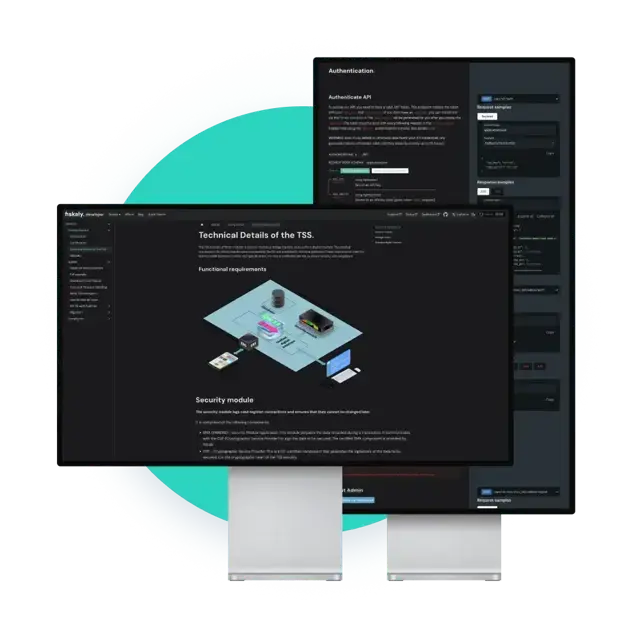
Why integrate fiskaly. SIGN ES?


Everything was straightforward, well documented and the webinar helped me to clarify the steps. Overall, the integration took around 1 day to complete.
From documentation to a live integration in a single day
~1 day
total integration time
Product
SIGN ES
1 of 3
Interested? Request a first meeting
- We're here to help with any questions and find the perfect solution.
- Over 1,900 customers trust our fiscalization solutions. We've got you covered!
FAQs
Yes. Franchisors that provide their franchisees with billing platforms or software solutions must ensure full compliance with Verifactu. Every point of sale issuing invoices through software must operate with a certified system — regardless of whether the solution is provided by the franchisor or the franchisee directly.
Verifactu is the name used to refer to softwares that comply with the anti-fraud law and the project of legislation published in February 2022. The Ministerial Order was officially published in the Official State Gazette (BOE) on October 28, 2024, marking the start of the 9-month adaptation period for billing software. The regulation establishes the requirements for billing systems, which must be able to communicate in real-time with the Spanish Tax Agency.
Billing software will be required to comply with the VeriFactu requirements starting July 29, 2025.
Compliance with Verifactu requirements will be mandatory for companies and freelancers throughout Spain, except for all companies with a tax residence in the Basque Country, where the TicketBAI regulation applies.
Additionally, Verifactu will not replace the SII (Immediate Supply of Information) system, but it will impact those taxpayers who were not yet required to comply with it (companies and freelancers with an annual turnover of less than 6 million euros).
If you are a manufacturer or distributor of ERP software, accounting or management systems, whether B2B or B2C, and your system enables invoice issuance, Verifactu will also affect you because your software must be able to comply with the regulation mandatorily from July 29, 2025.
The Anti-Fraud Law aims to prevent and combat tax fraud and mostly came into effect on October 11, 2021. On October 28, 2024, the Ministerial Order was published, starting the 9-month adaptation period for billing software. Meeting the technical requirements of Verifactu is mandatory for developers and vendors of invoicing software in Spain since July 29, 2025. For taxpayers, the regulation comes into force in 2027, after the postponement announced by the Spanish government: on January 1 for legal entities, and on July 1 for self-employed professionals.
Yes, Verifactu applies to any software in Spain with invoicing capabilities, including POS systems, ERP, hotel management systems (CMS), invoicing programs marketed by independent developers (ISVs), or custom-developed business software.
Yes, Verifactu will be mandatory for issuing any type of invoice within Spain by a company with a tax domicile in Spanish territory (excluding the three provinces of the Basque Country, which must comply with TicketBAI, and companies based in Navarra, which are subject to a separate fiscal reporting regulation currently under development).